
The Maharashtra Food and Drug Administration (FDA) has suspended the licences of popular Mumbai restaurant Cafe Mondegar and three other food establishments due to serious food safety and hygiene violations. This action is part of an intensified crackdown by the FDA, which also saw inspections of 38 establishments, seizure of substandard food products worth over Rs 15 lakh, and action against banned gutkha products totalling Rs 1.35 crore in seized goods and vehicles across Maharashtra.

'We were in a heavily nuclearised environment. China had tested for Pakistan in the 1980s and helped their missile programme stay just one step behind us.'

He was the army commander who planned Operation Bluestar. As army chief he planned Operation Brasstacks which rattled the Pakistan army. General K Sundarji was brilliant, ambitious and controversial, remembers Rahul Bedi.
China and Pakistan are in a tight strategic alliance. India must deal with them one at a time, but be prepared in case they decide to collude, points out Shekhar Gupta.

'Pakistan's only concern has been while they were on the FATF watch list was to distance their State institutions and organs from any direct connection with the actual execution of militancy inside Kashmir.'

'The victory is an expression of agrarian distress and social turmoil.'

The idea of weaponization got a fillip from an unexpected quarter. In the last week of October 1985, Rajiv met US President Ronald Reagan. Reagan told Rajiv, 'Pakistan has already made a bomb.' When Rajiv started talking about disarmament, the US president cut him short, 'Don't talk theory, think of your own protection.'

'Khalistan would have been in existence today, but for the army.'

One hopes in his next term, Narendra Modi will take up the mission of inculcating respect for following rules in Indians as a mission. Therein lies the chance for India to become a developed country, asserts Colonel Anil A Athale (retd).

Gianiji had crafted his moves with the meticulous planning of a chess grandmaster. He did not know whether a checkmate was feasible, as his time was running out, but he wanted Rajiv Gandhi to smell the fear of loss. A fascinating excerpt from K C Singh's The Indian President: An Insider's Account of the Zail Singh Years.

The answer to Chinese tactics of nibbling territory is not defence of every inch -- a military impossibility -- but instead, nibbling at Chinese territory wherever we are in a stronger position, counsels Colonel Anil A Athale (retd).
B D Pande was Punjab's governor during Operation Bluestar. In this excerpt from his memoir, In the Service of Free India: Memoir of a Civil Servant, Pande reveals what really went on behind the scenes during those dark days in India's history.

'I'm now living under threat, but life has to go on because as a soldier, you can't run away from it.'
As India's international role expands, so must our capabilities, says Brigadier Gurmeet Kanwal (retd).

General T N Raina was an iconic Indian military leader whose contributions to the nation should be more widely known, notes Lieutenant General Syed Ata Hasnain (retd).
We should have anticipated it on August 5 last year, when we made the big changes in J&K. Amit Shah left nothing to chance when he told Parliament that 'we will bring back Aksai Chin even at the cost of our lives'. 'Then, there were the new maps, objections to the CPEC going through Indian territory, the weather reports.' A broad territorial status quo had existed in Ladakh-Aksai Chin since 1962. India made its intention to change this public, notes Shekhar Gupta.
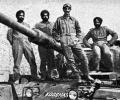
'He was unlike anyone else I had met until then or ever since.' Lt Gen Ashok Joshi (retd) remembers one of India's most famous soldiers who passed away on Sunday.

If the Taliban have proved one thing over these two decades, it is that they are way smarter than their big brother, observes Shekhar Gupta.

If the government of the day would like to set in place a smooth and well-planned changeover and facilitate the incoming chief to chalk out his action plan well in advance, the announcement of a successor needs to be done early, observes Colonel K Thammayya Udupa (retd).

In an unprecedented move, IAF Chief BS Dhanoa has written a personal letter to each officer in the Indian Air Force.

It may be a case of history repeating itself as the defence company at the heart of parliamentary queries over Britain's involvement in Operation Bluestar is none other than AgustaWestland, which recently lost out on a lucrative contract to supply helicopters to India over allegations of corruption.
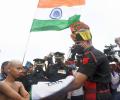
'This Chinese behaviour we have not seen for a very long time.' 'This sort of build up on the border, this pattern in Chinese behaviour, and especially the aggression and brutality with which our people were attacked on the 15th of June, this is not something we have seen before.'
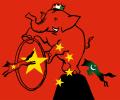
'An elephant has to behave like an elephant and not shy away from confronting the jackals,' argues Colonel (Dr) Anil A Athale.
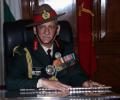
The new army chief's highest priority must be to address the critical hollowness in the Indian Army's operational preparedness, says Brigadier Gurmeet Kanwal (retd).
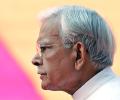
How seriously should we take Natwar Singh's book? Indeed how seriously should all such memoirs and autobiographies be taken? The answer, I imagine, depends on the intent. If the authors are merely settling scores, as many think Natwar Singh is, future historians would be entitled to ignore such autobiographies. But if there is no mens rea (guilty mind), so to speak, these books must be taken seriously, says T C A Srinivasa-Raghavan.

'General Sam Manekshaw looked from left to right and said, "Gentlemen, I have come to have a look at you. I am taking a good look at your faces. When I come back after the war is over, some faces may not be here".'
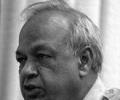
Stephen P Cohen pays tribute to strategic expert B Raman, who passed away recently.

'In the short to medium term, the Myanmar raid will impose caution on Pakistan in planning another 26/11-like adventure. As a result of this caution, even if the proxy war ebbs, it will reduce the danger of escalation to a nuclear stand-off,' says Colonel Anil A Athale (retd).

20 years ago this day, May 11, 1998, India conducted its second nuclear test at Pokharan in Rajasthan. In a fascinating interview on Rediff.com, K Subrahmanyam revealed how Indian PMs reacted to nuclear ambitions.

'In her insecurity, she destroyed the institutions of democracy.' 'She packed Parliament with her supporters with loyalty being more important than ability; she superseded judges; she corrupted the civil service.' 'She knew how to use people against each other and was quite a master of that.' 'She would do this with calculated skill and in the bargain cause enmity between brothers, split up families.'
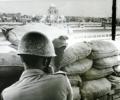
'It is time for all Indians to understand the truth that led to a 10-year long bloodbath in Punjab and not attempt to glorify the terrorists under the garb of human rights violations or scratch old wounds,' says Colonel Anil A Athale (retd), on the 30th anniversary of Operation Bluestar.

'On June 15, 1965, Major A K Afridi of the Pakistan army was captured by Papa's 1 Mahar unit near Vigokot, when he accidently walked into Indian territory.' 'While he was being airlifted to Delhi from Kutch, Major Afridi made a request: He wanted to watch Sangam>, the movie starring Raj Kapoor and Vyjayantimala. It was a request that the Indian Army fulfilled.' 'Major Afridi was sent with armed escorts to watch the movie in Ahmedabad and then sent to Delhi for further interrogation.'
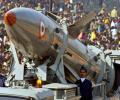
It is time the new government, unencumbered with the burden of past, initiates a wide ranging review and open debate on the security issues to rectify our short term and long term shortcomings. It has taken some wise steps but has to go beyond this to identify the structural weakness and create systems, says Colonel (retd) Anil Athale.

'In her insecurity, she destroyed the institutions of democracy,' says Khushwant Singh.
